
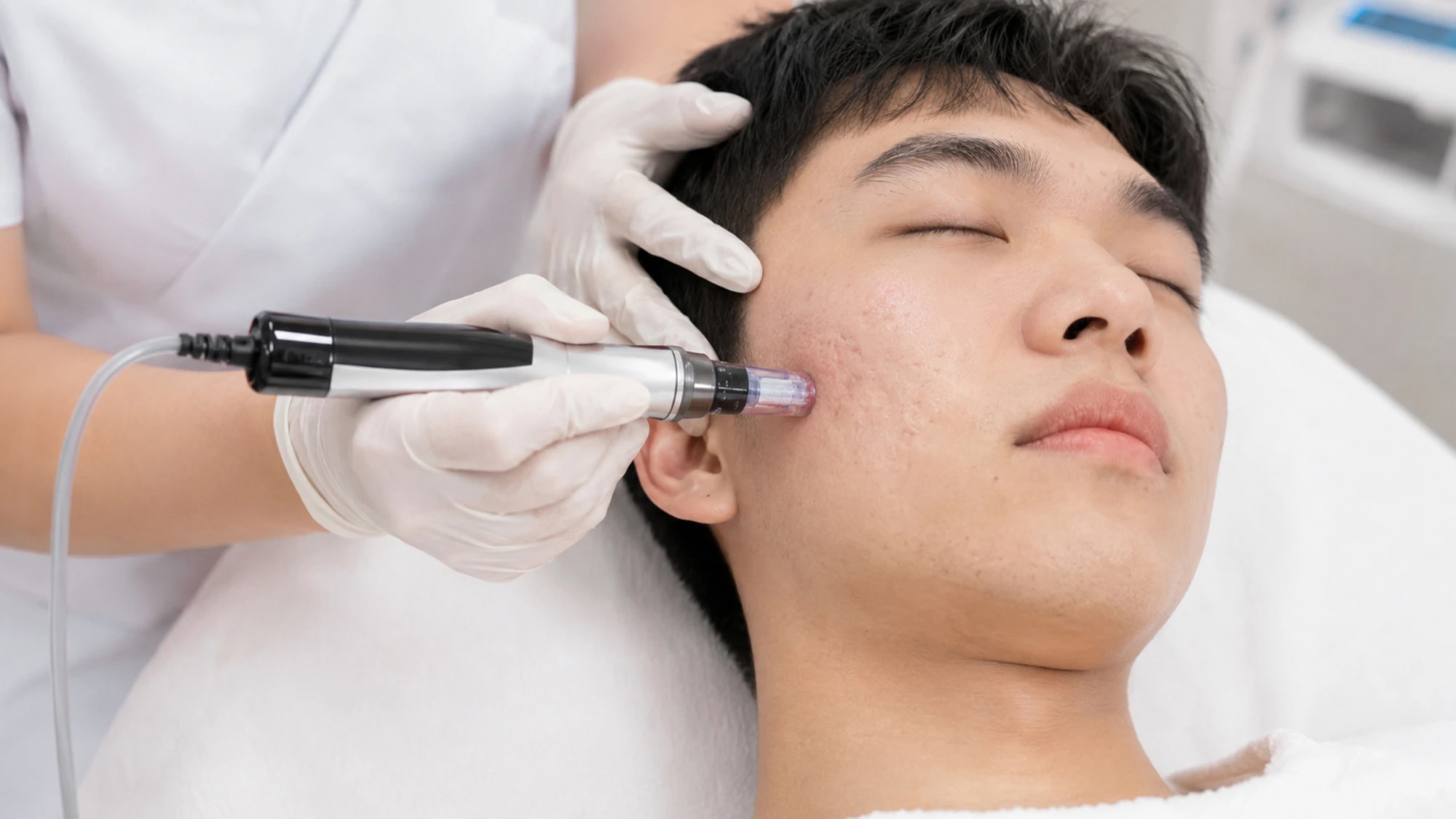
Microneedling vs RF microneedling comes down to one main upgrade: both use tiny needles to trigger your skin's natural collagen production, but RF microneedling adds radiofrequency energy that heats the deeper layers of skin to tighten it and boost results. Traditional microneedling is a gentler option focused on texture and tone, while RF microneedling reaches deeper and adds a firming effect. Neither is simply better, and the right choice depends on your goals, your skin, and your budget. Here is how they compare.
RF stands for radiofrequency, a type of energy that produces heat. Adding that heat to the microneedling process is the single feature that separates the two treatments, and it changes what each one can do. Understanding that difference makes the decision much clearer.
Microneedling vs RF Microneedling: The Short Answer
Traditional microneedling is often the better fit for surface concerns like fine lines, enlarged pores, and mild scarring, while RF microneedling is stronger for skin laxity, deeper wrinkles, and more advanced texture. Both stimulate collagen, both have minimal downtime, and both work best as a series. If firming and tightening are your priority, RF has the edge. If gentle rejuvenation is your goal, traditional microneedling may be all you need.
How Traditional Microneedling Works
Traditional microneedling uses a device with fine needles to create thousands of tiny, controlled micro-injuries in the skin. Those micro-injuries prompt your body to produce fresh collagen and elastin as it heals, which gradually improves texture and tone. It works at a relatively superficial to medium depth, which makes it a reliable choice for microneedling skin rejuvenation, smoother texture, softer fine lines, smaller-looking pores, and mild acne scarring.
How RF Microneedling Works
RF microneedling does everything traditional microneedling does, then adds radiofrequency heat. As the needles reach the deeper layers of the skin, they release RF energy that warms the tissue, which stimulates significantly more collagen and remodels existing collagen for a tightening effect. That combination is why radiofrequency microneedling treatment can address concerns traditional microneedling cannot, especially early skin laxity and deeper lines. Because the energy targets deeper layers while sparing the surface, it can deliver stronger results with a comparable safety profile in trained hands.
The Key Differences Between the Two
The differences that matter most are depth, tightening, and intensity. In short:
- Mechanism: traditional microneedling uses needles alone, while RF microneedling adds heat energy.
- Depth and tightening: RF reaches deeper and firms the skin, which basic microneedling does not do.
- Strength of results: RF generally produces more dramatic changes for laxity and deeper concerns.
- Downtime: both are low, though RF can involve slightly more redness and swelling because of the heat.
- Cost: RF microneedling is typically priced higher, since the technology does more.
One thing they share is an advantage over light-based treatments. Because microneedling does not rely on targeting pigment, both versions suit a wide range of skin tones, though your provider should still assess your skin and goals first.
What Each Treatment Is Best For
The best treatment is the one matched to your concern. Traditional microneedling tends to suit people focused on overall glow, fine lines, uneven texture, visible pores, and mild acne scars, and it is a common entry point into collagen-building treatments. The RF microneedling benefits are most noticeable for people dealing with mild skin laxity, sagging along the jawline or neck, deeper wrinkles, and more stubborn acne scarring, or anyone who wants a firming effect alongside texture improvement.
Downtime and What to Expect After
Both treatments have modest recovery, which is part of their appeal. After traditional microneedling, expect redness and a warm, tight feeling for about one to three days, sometimes with light flaking. RF microneedling downtime is similar and occasionally a touch longer, with redness and some swelling that usually settle within a few days. For both, you will keep your skincare gentle and simple for a few days, avoid sun and heavy sweating at first, and protect your skin with daily sunscreen.
Numbing cream keeps both treatments comfortable, and RF may feel warm during the session. Results build gradually over several weeks as collagen forms, and a series of sessions usually produces the best outcome.
Which One Is Right for You?
Start with your primary goal. If you mainly want smoother, fresher-looking skin and are addressing texture or fine lines, traditional microneedling is often enough and gentler on your budget. If your main concern is firmness, sagging, or deeper lines, the added tightening from RF microneedling is worth considering, keeping in mind it usually costs more. Your skin, your medical history, and your provider's assessment all factor in, so a consultation is the best way to decide. As with any treatment, the provider's skill matters as much as the device.
Compare Microneedling Providers Near You
Because results depend on the device and the provider running it, the best next step is finding an experienced practice and discussing which option fits your goals. You can read our microneedling treatment guide and explore medical spas near you on Medspa Maps to compare providers, check reviews, and book a consultation with someone you trust.
Frequently asked questions
Is RF microneedling better than regular microneedling?
Not universally. RF adds heat that tightens skin and reaches deeper, so it is stronger for laxity and deeper concerns. Traditional microneedling is a gentler, lower-cost option for texture and tone.
Does RF microneedling tighten skin?
Yes. The radiofrequency heat stimulates and remodels collagen in deeper layers, which produces a firming effect that basic microneedling does not offer.
Is RF microneedling more painful?
Both are kept comfortable with numbing cream. RF may feel warm during treatment, but most patients tolerate it well.
How much downtime is there?
Both are low-downtime treatments. Expect redness and possible swelling for a few days, with RF sometimes lasting slightly longer because of the heat.
How many sessions will I need?
Both usually work best as a series spaced several weeks apart, with results building over time. Your provider will recommend a plan based on your goals.