
TL;DR — Key takeaways
- “Laser skin treatment” is an umbrella term for several very different technologies, and picking the right one depends on what you’re treating.
- IPL and BBL aren’t technically lasers (they’re intense pulsed light), and are best for redness, sun spots, and overall tone.
- Resurfacing lasers (ablative CO2/erbium and fractional like Fraxel) remodel the skin’s surface for wrinkles, texture, and scars, with more downtime.
- Non-ablative lasers like Laser Genesis work gently with little to no downtime, and are better for redness, fine lines, and maintenance.
- Downtime scales with intensity, from zero (IPL, Genesis) to a week or more (fully ablative CO2).
- Laser choice and settings matter enormously for darker skin tones, where the wrong device can cause burns or pigment changes, so provider expertise is critical.
What is a laser skin treatment?
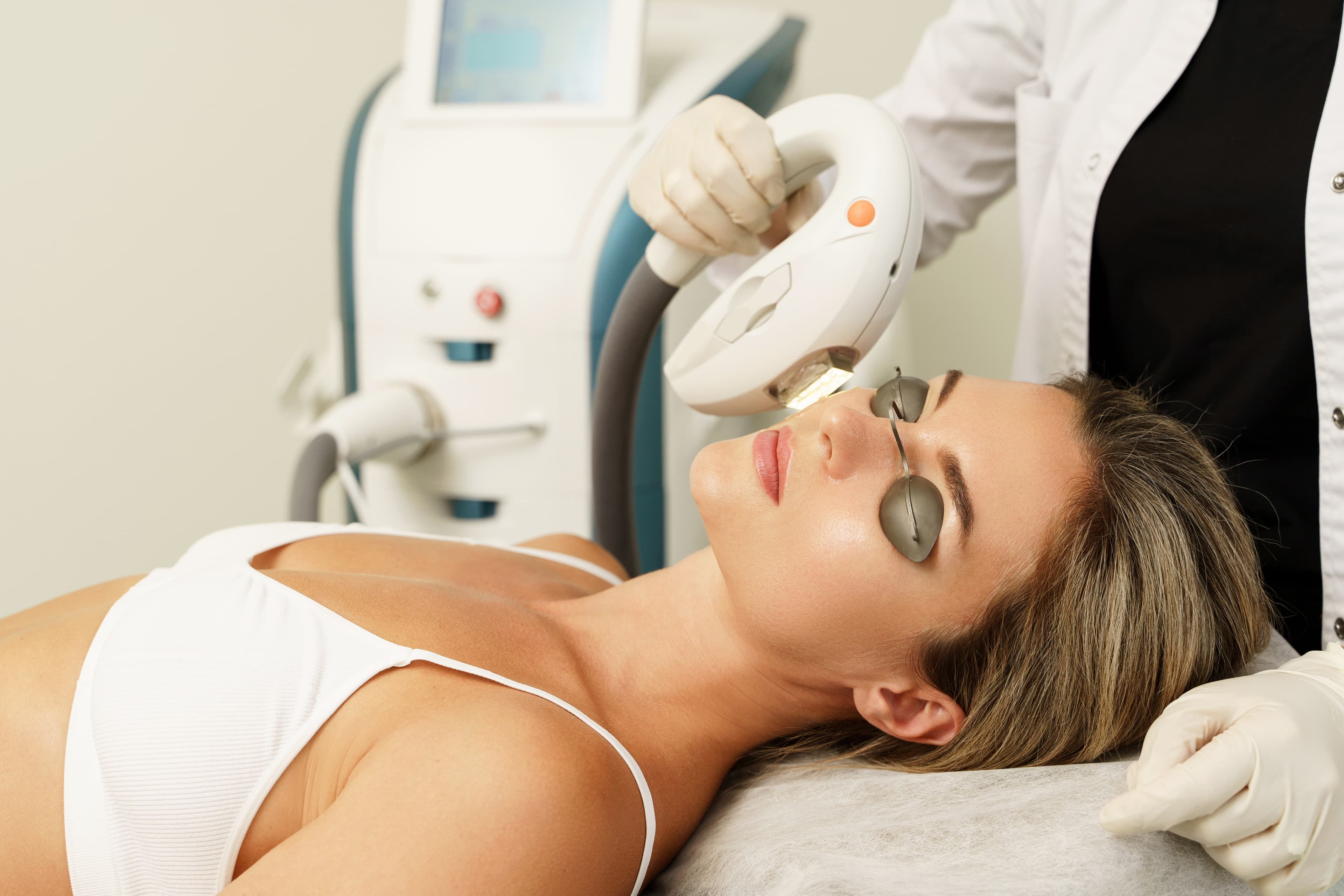
“Laser skin treatment” is an umbrella term for a range of light- and laser-based procedures that improve skin tone, texture, pigmentation, redness, and signs of aging. They fall into two big splits: true lasers versus intense pulsed light (IPL/BBL), and ablative (removing the surface) versus non-ablative (heating beneath it).
Understanding those two splits is the key to cutting through the confusing acronym soup. A true laser delivers a single, focused wavelength of light; IPL and BBL deliver a broad spectrum of light instead. Ablative devices remove the outer layers of skin for more dramatic remodeling and more downtime, while non-ablative devices heat the deeper skin without wounding the surface, trading intensity for a faster recovery.
“IPL and BBL aren’t actually lasers; they’re intense pulsed light. That distinction matters, because light-based treatments and true lasers treat different concerns.”
IPL vs. BBL: what’s the difference?
Both IPL and BBL use broadband intense pulsed light, not a true laser, to target pigment and redness. BBL (BroadBand Light) is Sciton’s advanced, more powerful and precise version of IPL. Both are best for sun spots, redness, and overall tone, with little downtime.
If you have brown sun spots, diffuse redness, or generally uneven tone and want a “glow up” with minimal recovery, IPL or BBL is often the starting point. They tend to perform best on lighter skin tones, and they’re typically done as a short series. They are not resurfacing treatments, so they do less for deep wrinkles or textured scars.
What is laser resurfacing (ablative and fractional)?
Resurfacing lasers remove or damage columns of skin to trigger new collagen and reveal smoother skin. Fully ablative lasers (CO2, erbium) treat the entire surface for dramatic results with more downtime, while fractional lasers (like Fraxel) treat only a fraction of the skin at a time for a faster recovery.
This is the category to consider for deeper wrinkles, significant sun damage, and acne or surgical scars. Fully ablative CO2 resurfacing is the most powerful option, but it comes with the longest downtime, often a week or more of visible healing. Fractional resurfacing spreads the treatment across microscopic zones, so you get meaningful improvement with less downtime, usually across a few sessions.
“The more dramatic the result, the more downtime you should expect: an ablative CO2 laser can mean a week of recovery, while Laser Genesis has virtually none.”
What is Laser Genesis / a non-ablative laser?
Non-ablative lasers like Laser Genesis gently heat the skin beneath the surface without wounding it, improving redness, pore size, fine lines, and overall glow with essentially no downtime, over a series of sessions.
These are the “lunchtime” treatments: you can typically return to normal activities right away. Because they’re gentle, results build gradually and maintenance sessions help sustain them. They’re a popular choice for people who want steady improvement and a healthy glow without committing to recovery time.
Laser and light treatments compared
Here’s how the most common options stack up on what they treat, how much downtime to expect, and how many sessions are typical.
| Treatment | Type | Best for | Downtime | Sessions |
|---|---|---|---|---|
| IPL | Intense pulsed light | Sun spots, redness, tone | Minimal (hours–2 days) | 3–5 |
| BBL | Advanced IPL | Sun spots, redness, prevention | Minimal | 3–5 |
| Fraxel | Fractional laser | Texture, fine lines, scars, pigment | 2–7 days | 3–5 |
| CO2 / erbium | Ablative laser | Deep wrinkles, scars, sun damage | 1–2+ weeks | 1–2 |
| Laser Genesis | Non-ablative laser | Redness, pores, fine lines, glow | None | 4–6 |
| Nd:YAG / Pico | Laser | Pigment, redness, tattoo removal | Minimal | Varies |
Which laser is best for my concern?
The best device depends on what you’re treating. Here’s a quick map from common concerns to the treatments providers most often reach for.
- Sun damage and pigmentation: IPL or BBL for broad tone; pigment-specific lasers (Q-switched, pico) for stubborn spots. (See our guide to fading hyperpigmentation and dark spots.)
- Redness and rosacea: IPL/BBL and non-ablative lasers like Laser Genesis; pulsed-dye lasers for visible vessels.
- Wrinkles and texture: fractional resurfacing or ablative CO2 for deeper lines; Laser Genesis for fine lines and glow.
- Acne scars: fractional and ablative resurfacing lasers, which remodel scarred texture.
- Skin tightening: non-ablative and radiofrequency-based devices (note: many “tightening” treatments use radiofrequency rather than a laser).
How much do laser treatments cost?
Cost scales with intensity: lighter treatments like IPL and Laser Genesis are the most affordable, fractional resurfacing sits higher, and full ablative CO2 resurfacing is the most expensive, though it may take only one or two sessions. Prices vary widely by device, provider, and location.
Your total depends on the device, the number of sessions, the size of the treatment area, and your provider and location. Because a series is common for gentler treatments, ask what a realistic plan looks like for your goals and whether package options are available.
Are lasers safe for darker skin tones?
Some laser treatments are safe for deeper skin tones and some are not, it comes down to the device, the wavelength, and the settings. Certain lasers such as Nd:YAG, and conservative fractional settings, tend to be safer, while aggressive IPL and fully ablative treatments carry more risk of burns and pigment changes.
The stakes are higher in richer skin tones because more active melanin can absorb laser energy unpredictably, leading to burns, or to lightening or darkening of the skin. The most important safeguard is choosing a provider who is genuinely experienced with your skin type and uses appropriate devices and settings, never assume every clinic’s laser is right for every skin tone.
What to expect: downtime, sessions, and aftercare
Your experience depends on the intensity of the treatment, but most laser and light procedures involve some prep beforehand, a short in-office session, and diligent sun protection afterward.
Before
Providers usually advise avoiding sun exposure and self-tanner beforehand, and pausing retinoids or other actives for a few days. A consultation confirms the right device for your skin and concern.
After
- Expect redness and warmth like a mild sunburn, plus flaking or peeling with resurfacing treatments.
- Keep skin protected and moisturized, and follow your provider’s specific aftercare.
- Wear broad-spectrum SPF daily, sun exposure after treatment can cause pigmentation problems.
- Plan your recovery time around the treatment’s downtime, especially for ablative resurfacing.
- Complete the full recommended series for gentler treatments to see the best results.
How to choose a laser provider
Because clinics carry different devices and outcomes depend heavily on skill, choose a provider based on their equipment, experience, and expertise with your skin type, not just price. Ask what device they’ll use, why, and how much experience they have with it.
A good provider will assess your skin, explain which treatment fits your goals, and set realistic expectations about downtime and results. If you’re comparing clinics nearby, Medspa Maps lets you find and compare laser providers, see which devices they offer, and read reviews before booking a consultation.
Frequently asked questions
Is IPL a laser?
No. IPL (intense pulsed light) and BBL use broadband light rather than a single-wavelength laser beam. They are excellent for sun spots, redness, and overall tone, but they work differently from true lasers and treat somewhat different concerns.
Which laser is best for sun spots and pigmentation?
IPL and BBL are popular for sun spots and uneven tone on lighter skin, while pigment-specific lasers such as Q-switched and picosecond devices target stubborn pigment. The best choice depends on your pigmentation type and skin tone, so a provider assessment matters.
How many sessions will I need?
Gentler, non-ablative treatments like IPL and Laser Genesis are usually done in a series of 3 to 6 sessions, while a single ablative resurfacing treatment can deliver dramatic results in one or two sessions with more downtime.
How much does laser resurfacing cost?
Costs vary widely by device and depth. Lighter treatments like IPL or Laser Genesis are the most affordable, fractional resurfacing sits higher, and full ablative CO2 resurfacing is the most expensive. A consultation gives an accurate quote.
Is laser skin treatment safe for dark skin?
Some devices are, and some are not. Wavelength and settings are critical: certain lasers like Nd:YAG and conservative fractional settings can be safer for deeper skin tones, while aggressive IPL and ablative treatments carry more risk of burns or pigment change. Provider expertise is essential.
How long is the downtime?
Downtime scales with intensity, from essentially none for IPL and Laser Genesis, to a few days for fractional treatments, to a week or more for fully ablative CO2 resurfacing.
Does laser skin treatment hurt?
Most treatments cause a warm, snapping or prickling sensation. Numbing cream is commonly used, especially for more intensive resurfacing, so discomfort is usually manageable.
How long do results last?
It varies by treatment and concern. Resurfacing results can last for years with good sun protection, though no treatment stops ongoing aging; maintenance sessions and daily SPF help preserve results.